Qatar’s hospitality and serviced-apartment market reached 42,131 keys by the end of the second quarter of 2026, according to Cushman & Wakefield Qatar, a 2.2% increase on the 41,240 keys recorded a year earlier. In practical terms, that figure represents the total number of bookable hotel rooms and serviced apartments available across the country at that point in the year, not the number of hotels, and not the number of beds a guest could sleep in.
This number matters to travelers because it is the clearest available signal of how much accommodation choice exists in Qatar right now, and where that choice is concentrated. It does not, on its own, say anything about price. A larger inventory can coexist with higher rates during peak events, and a smaller inventory can still offer good value in quieter months. What the figure does tell a traveler is how the market is shaped: which categories of hotels are expanding, which are contracting, and where in Doha new supply is landing.
This guide breaks down what “42,000+ keys” actually means, how Qatar’s accommodation inventory has evolved, and what that evolution means for tourists, business travelers, families, and long-stay visitors planning a trip to Doha in 2026.
What Does “42,000+ Hotel Keys” Mean?
In hospitality reporting, a “key” is the standard unit used to measure accommodation supply. One hotel room generally equals one key, regardless of whether it is a standard room, a suite, or a villa unit. A 300-room hotel is generally reported as approximately 300 keys.
A few distinctions matter when reading hotel-supply data:
- Keys are not beds. A single key (room) may sleep one, two, or more guests depending on configuration, so the number of keys does not equal the number of people the market can accommodate.
- Keys are not properties. Qatar’s overall key count is spread across many individual hotels, resorts and serviced-apartment buildings; the number of keys says nothing about how many separate properties exist.
- Serviced apartments are counted separately from hotel rooms in most market reports, even though both are included in the total accommodation figure. Cushman & Wakefield’s Q2 2026 figure of 42,131 keys is a combined hospitality and serviced-apartment total, not hotel-only.
- Suites are typically counted as one key each, following standard industry reporting convention, even though a suite may include a living area or multiple rooms.
Because different research firms and government bodies sometimes use slightly different scopes (hotel-only inventory versus hotel-plus-apartment inventory, for example), figures from different sources are not always directly interchangeable. This article notes the reporting period and source for every figure used.
Qatar Hotel Supply in 2026 at a Glance
| Indicator | Latest Available Figure | Period | Source |
|---|---|---|---|
| Total hospitality and serviced-apartment keys | 42,131 keys | End of Q2 2026 | Cushman & Wakefield Qatar |
| Five-star hotel inventory | 20,312 keys (+2.3% YoY) | Q2 2026 | Cushman & Wakefield Qatar |
| Serviced hotel apartments | 11,003 keys (+9.6% YoY) | Q2 2026 | Cushman & Wakefield Qatar |
| Four-star (mid-scale) inventory | 7,750 keys (-5.3% YoY) | Q2 2026 | Cushman & Wakefield Qatar |
| Economy one-to-three-star inventory | Contracted 5.1% YoY (absolute figure not published) | Q2 2026 | Cushman & Wakefield Qatar |
| International visitor arrivals (full year) | 5.1 million (+3.7% YoY) | Full-year 2025 | Qatar Tourism |
| Room nights sold (full year) | 10.8 million (+8.6% YoY) | Full-year 2025 | Qatar Tourism |
| Average full-market occupancy (full year) | 71% | Full-year 2025 | Qatar Tourism |
A separate Cushman & Wakefield update reported total supply at approximately 42,500 keys around the turn of 2026, following notable 2025 openings including Rosewood Doha, the OQ and Muse hotels in Lusail, and Andaz Doha in West Bay. The modest difference between that figure and the 42,131 keys reported for the end of Q2 2026 reflects the normal quarter-to-quarter movement in a market where some properties open, some are reclassified, and reporting cycles do not always align exactly. Readers should treat both as directionally consistent rather than contradictory: Qatar’s accommodation base has been holding in the low-to-mid 42,000s through the first half of 2026.
How Qatar’s Hotel Inventory Has Changed
Qatar’s hotel supply has grown substantially over the past decade, but the pace and shape of that growth have shifted. Hotel room supply stood at 29,386 by the end of 2021, having grown at roughly a 6% compound annual rate since 2015. Supply expanded sharply ahead of the FIFA World Cup 2022, when new openings, serviced apartments and temporary accommodation formats were added to meet a one-off surge in demand.
In the years since the World Cup, expansion has been more measured. Cushman & Wakefield reported that fewer than 1,000 hotel keys were delivered in the twelve months to Q3 2024, compared with an average of more than 2,800 keys per year between 2014 and 2023. That slower pace continued into 2025 and 2026, with growth increasingly concentrated in specific categories rather than spread evenly across the market.
The broader context is Qatar’s push to grow tourism as part of its economic diversification strategy, including a stated goal of tripling international visitor arrivals between 2022 and 2030. New hotel supply has not been driven by any single event; it reflects a combination of post-World Cup positioning, a growing international events calendar, and continued development in newer districts such as Lusail, alongside more selective investment elsewhere.
Qatar’s Five-Star Hotel Supply
The five-star segment is the largest single category in Qatar’s accommodation market. It reached 20,312 keys in Q2 2026, up 2.3% year-on-year, and accounts for roughly half of total hospitality and serviced-apartment inventory. Historically, luxury, upper-upscale and upscale hotels combined have made up around three-quarters of Qatar’s overall hotel supply, a share that is reportedly expected to grow further as new development continues to skew toward higher categories.
Growth in this segment has come from a mix of established international brands and newer additions, including openings such as Rosewood Doha and Andaz Doha in West Bay during 2025. This reflects continued investor confidence in premium, brand-affiliated hotels aimed at both business and leisure demand.
More five-star rooms do not automatically mean better value for every traveler. A five-star property in one district may be a poor fit for a visitor whose priority is proximity to a specific venue, a family-friendly pool, or a lower nightly rate. Travelers comparing luxury hotels in Doha should weigh location, room type, dining and transport access, service style, and the actual purpose of the trip, rather than assuming that star rating alone determines the right choice.
The Growth of Serviced Apartments in Qatar
Serviced apartments have been the fastest-growing segment of Qatar’s accommodation market, reaching 11,003 keys in Q2 2026, a 9.6% increase year-on-year. This is a notably faster growth rate than either the five-star hotel segment or the market as a whole.
Serviced apartments tend to appeal to a specific set of travelers:
- Families who want more living space and kitchen facilities than a standard hotel room offers
- Business travelers on extended assignments or project-based stays
- Long-stay visitors who prefer apartment-style accommodation to a traditional hotel format
- Guests relocating to Qatar temporarily while securing longer-term housing
This growth appears linked to hotel operators and developers positioning their portfolios toward longer-stay and corporate-contract demand, alongside traditional short-stay hotel business. That said, serviced apartments are not inherently cheaper than hotel rooms; pricing depends on location, brand, size and season, just as it does for conventional hotels. Some quarterly data have also shown softer occupancy in the serviced-apartment segment compared with hotels, suggesting demand for this format can be more variable quarter to quarter.
What Is Happening to Mid-Scale and Economy Hotel Supply?
Not every part of Qatar’s accommodation market is expanding. Four-star supply contracted by 5.3% year-on-year to 7,750 keys in Q2 2026, and one-to-three-star economy supply contracted by 5.1% over the same period.
This is a meaningful nuance for travelers researching Qatar’s hotel market: total accommodation supply is growing overall, but that growth is not evenly distributed. Investment has skewed toward five-star hotels and serviced apartments, while mid-scale and budget-oriented supply has shrunk. Some reporting has also noted that three-star hotels have posted strong occupancy performance despite the smaller supply base, pointing to continued price-sensitive demand from regional and value-conscious travelers even as the category contracts.
The practical takeaway is that travelers should not judge Qatar’s accommodation market purely by its headline total. A market can grow in size while narrowing in terms of price-point choice, and budget-conscious travelers may find that competition for lower-cost rooms has increased even as luxury options multiply.
Qatar Hotel Supply vs Tourism Demand
Supply figures only tell half the story. On the demand side, Qatar recorded 5.1 million international visitors in full-year 2025, up 3.7% year-on-year, according to Qatar Tourism. Room nights sold reached 10.8 million, an 8.6% increase over 2024, and average full-market occupancy for the year came in at 71%.
Demand in 2026 has been more uneven quarter to quarter. Qatar Tourism data cited by Cushman & Wakefield showed January 2026 occupancy at a strong 84.1%, up from 79% in January 2025, with first-quarter occupancy averaging 68% and Average Daily Rates rising 1.5% year-on-year to QR448.9. Conditions shifted in the second quarter: regional geopolitical tensions that began in late February disrupted inbound travel, and Q2 2026 occupancy softened to 52%, a 23.5% drop from Q1 2026 and well below the 71% and 70.7% levels recorded in Q2 2025 and Q2 20,2,4 respectively. International arrivals for Q2 2026 fell to 618,000, down 44.7% year-on-year, and Q2 Average Daily Rates settled at QR378.8, down 16.4% year-on-year.
Despite this softer second quarter, analysts have pointed to the year’s strong start and to a busy calendar of international events in the final months of 2026, including MotoGP Qatar and the Formula 1 Qatar Airways Grand Prix, as reasons the sector’s underlying fundamentals remain intact. Reflecting this more cautious environment, Cushman & Wakefield has also noted that near-term hotel development is likely to focus on selective, high-quality projects in core locations, rather than broad-based new supply, as developers wait for average daily rates to strengthen further before committing to large-scale expansion.
What Does Growing Hotel Supply Mean for Travelers?
Even accounting for the demand fluctuations of 2026, a larger and more diversified accommodation base does translate into some practical benefits for travelers:
- More accommodation choices overall, particularly in the five-star and serviced-apartment categories
- A wider range of branded international hotels, giving travelers more familiar loyalty programmes and service standards to choose from
- More apartment-style options for families and longer stays
- Greater geographic choice, as development continues across established and newer districts
- More capacity during major international events, when demand can spike sharply
- Potentially more competition among five-star properties, which can benefit travelers comparing amenities and packages
It is important not to overstate this. Growing supply does not automatically mean lower prices, better hotels, or more choice at every price point. As the mid-scale and economy contraction shows, some travelers may actually find fewer options in their preferred category even as the market as a whole expands.
Does More Hotel Supply Mean Lower Hotel Prices?
Not automatically. Hotel pricing in Qatar, as elsewhere, is driven by the balance between supply and demand at a given moment, not by supply alone. Several factors influence whether rates rise or fall:
- Visitor demand levels, which can shift quickly due to regional conditions
- Major sporting events, conferences and festivals that concentrate demand into short windows
- Seasonal patterns, including weekend versus weekday demand
- Hotel category, since luxury and budget segments respond differently to demand changes
- Location, as districts near major venues or business hubs can command premium rates during events
- New supply entering a specific category or district
- Occupancy trends and each hotel’s own pricing strategy
The 2026 data illustrates this well. Average Daily Rates actually rose in Q1 2026 even as supply grew, then fell in Q2 2026 as international arrivals dropped sharply due to regional disruption. Supply was relatively stable across both quarters; demand was not. This confirms that travelers should not assume a growing hotel market automatically means cheaper stays. Pricing depends on when they travel and what is happening in the destination at that time, not simply on how many keys exist nationally.
Doha Hotel Inventory and Where Travelers Can Stay
Location is one of the most important factors in choosing accommodation in Doha, and different districts suit different types of trips.
West Bay is Doha’s modern business and skyline district, home to many corporate offices and high-rise hotels, and is a common base for business travelers attending meetings in the city centre.
Msheireb is Doha’s downtown redevelopment district, positioned close to the historic core of the city and within reach of cultural sites.
The Pearl and Lusail are newer waterfront and planned-city districts that have seen recent hotel openings, including luxury and lifestyle properties, and suit travelers interested in newer developments, dining and retail.
Old Doha, including areas near Souq Waqif, appeals to travelers prioritising cultural sightseeing and traditional architecture.
اسبير زون, also known as Doha Sports City, is home to Khalifa International Stadium, Aspire Park, Villaggio Mall and a cluster of sports and leisure facilities, and suits travelers who want green space, sporting venues and family-friendly amenities within a self-contained area, while remaining within reasonable reach of the Qatar National Convention Centre, Qatar Foundation and Doha’s city centre.
The airport area offers convenience for short layovers or early departures.
Different travelers naturally weigh these locations differently. Business travelers typically prioritise proximity to conference venues, corporate districts and transport links. Families often look for attractions, larger rooms or apartment-style layouts, leisure facilities such as pools, and dining choices within walking distance. Tourists visiting for the first time often prioritise access to museums, souqs, waterfront areas and Doha’s growing metro network. No single district is universally “best”; the right choice depends on the itinerary.
Doha Accommodation Trends in 2026
Several observable trends are shaping Doha’s hotel market this year, based on current reporting:
- Continued growth concentrated in the five-star and serviced-apartment segments, rather than across all categories equally
- Contraction in mid-scale and economy supply, even as overall inventory expands
- New hotel openings in Lusail and West Bay, reflecting development activity in newer districts alongside established ones
- A more cautious, selective approach to new hotel development, with operators favouring high-quality projects in established locations over rapid expansion
- Demand that remains highly sensitive to the international events calendar and regional conditions, producing sharper swings in occupancy and rates between quarters than in previous years
- Continued government-backed tourism growth targets, supported by a broadening annual events calendar and infrastructure such as the planned Simaisma coastal destination
What Qatar’s Growing Hotel Supply Means for Business Travelers
For business travelers, Qatar’s accommodation growth has mostly benefited two things: choice near key business infrastructure and flexibility for varying trip lengths. The five-star segment’s continued expansion means more branded hotel options near West Bay, Msheireb and the Qatar National Convention Centre. Growth in serviced apartments also gives corporate travellers on multi-week assignments an alternative to a standard hotel room, with more living space for extended stays.
Airport access remains a practical consideration for short business trips, while hotels in central business districts or near the QNCC generally suit travelers whose itinerary is built around meetings and conferences. Business travelers should factor in both the length of their stay and how far their meetings are from where they sleep, since Doha’s business hubs are spread across more than one district.
What It Means for Families and Leisure Travelers
Families benefit from the growth in serviced apartments and from areas that combine hotel accommodation with leisure infrastructure. Not every hotel in Qatar offers family rooms, kids’ facilities, or connecting rooms, so this should be confirmed directly with a property rather than assumed based on star rating.
Leisure travelers generally look for a combination of pool and recreation facilities, dining variety, and reasonable proximity to attractions such as museums, malls,l,s and cultural sites. Districts such as Aspire Zone, which combine green space, sports venues and shopping with hotel accommodation, can suit families and leisure travelers who prefer a more self-contained base, while districts closer to the Corniche or Souq Waqif may suit those prioritising sightseeing on foot.
What Travelers Should Look for When Choosing a Doha Hotel
With a larger and more varied accommodation market, choosing the right Doha hotel comes down to matching the property to the actual trip rather than defaulting to the newest or most expensive option. Consider:
✓ Location relative to your main activities or meetings ✓ Room type and size, especially for families or longer stays ✓ Hotel category (five-star, four-star, serviced apartment) and what that means for facilities ✓ Transport access, including proximity to the metro or main roads ✓ Distance from key attractions or venues ✓ Dining options on-site and nearby ✓ Family facilities, if relevant, confirmed directly with the hotel ✓ Business facilities, such as meeting rooms, if relevant ✓ Parking availability ✓ Airport access and transfer time ✓ Cancellation conditions and booking flexibility ✓ Seasonal rate variation around major events ✓ Guest reviews from recent stays ✓ Total booking cost, including any resort or service fees
Choosing based on these factors, rather than on headline supply figures or star ratings alone, gives travelers a better chance of a stay that actually fits their trip.
Where Al Aziziyah Boutique Hotel Fits Into Qatar’s Accommodation Market
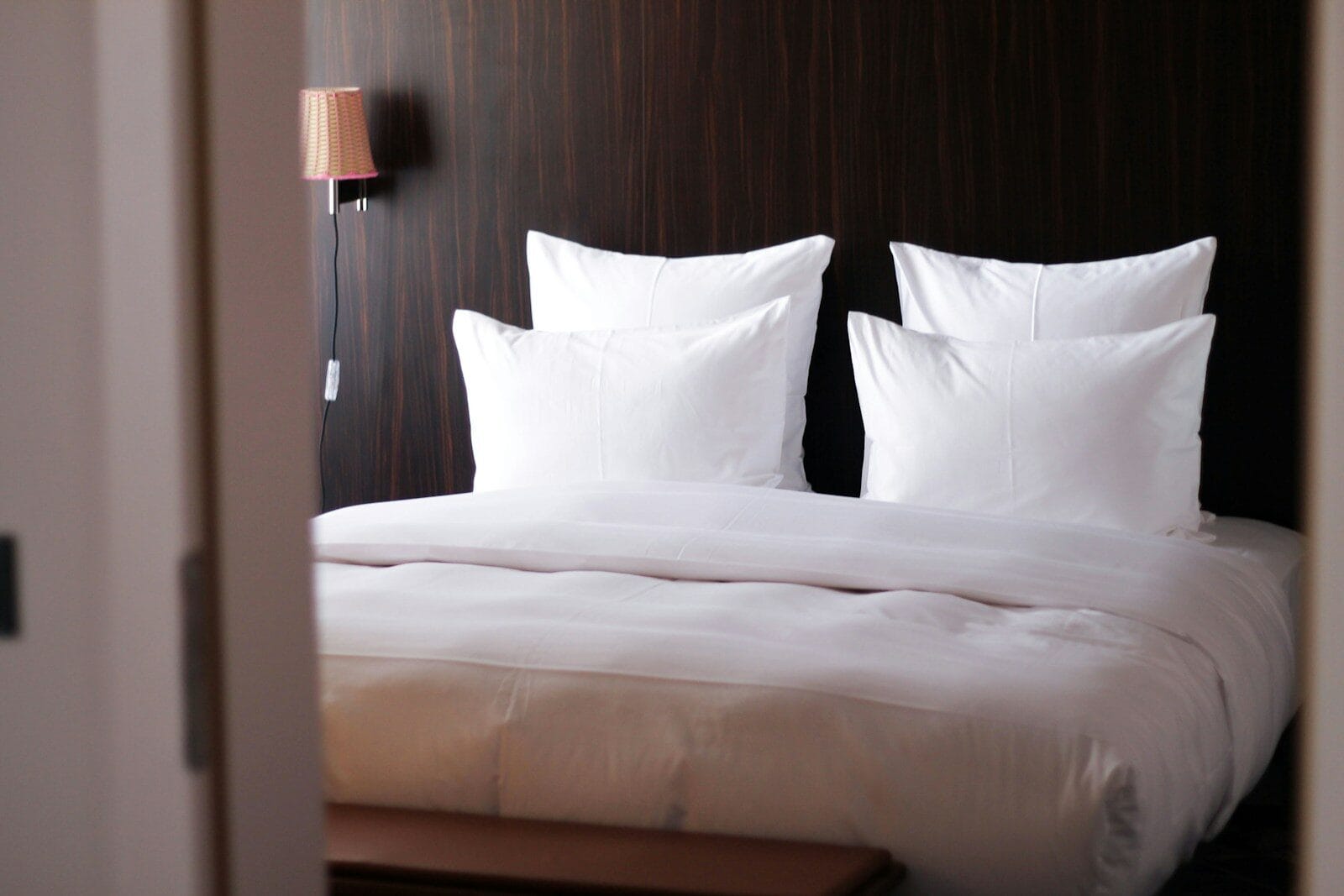
Al Aziziyah Boutique Hotel is a five-star property located in Doha’s Aspire Zone, part of the Torch Hospitality Group. The hotel is positioned as a Victorian-style boutique estate set within landscaped gardens, offering 139 rooms and suites across four categories: Deluxe Room, Junior Suite, Executive Suite, and Park Villa.
Its location places it within Aspire Zone, close to Aspire Park and Khalifa International Stadium, a short distance from Villaggio Mall, around ten minutes from the Qatar National Convention Centre and Qatar Foundation, roughly fifteen minutes from Doha’s city centre, about twenty minutes from Souq Waqif, and approximately twenty-five minutes from Hamad International Airport.
On-site facilities include an outdoor swimming pool with an attached children’s pool and waterslides, an indoor temperature-controlled pool, a 24-hour fitness centre, and spa facilities with treatment rooms, sauna, jacuzzi and steam room. Dining is offered across multiple outlets, including Glass House for all-day Classic and Pan-Asian dining, Patio Café for casual garden-side dining, and Victoria Lounge for afternoon tea. The property also offers five meeting and conference rooms suited to small and medium-sized business events, alongside dedicated wedding and events capacity.
Given this combination, Al Aziziyah Boutique Hotel is a relevant option for travelers seeking a five-star stay within the Aspire Zone district specifically: families drawn to the pool and green-space setting, sports-related visitors given the hotel’s proximity to Aspire Zone’s training and sporting venues, business travelers attending events at the nearby QNCC or Qatar Foundation, and leisure travelers who prefer a boutique, garden-set property over a high-rise business-district hotel. As with any Doha hotel, travelers should weigh this location and format against their specific itinerary, particularly if their plans are centred on downtown Doha, West Bay or the waterfront districts further from Aspire Zone.
Qatar Hotel Supply Outlook
Looking beyond current inventory, most recent commentary points to a more measured pipeline than in the years leading up to the FIFA World Cup 2022. Cushman & Wakefield has indicated that near-term hotel development is likely to remain concentrated in selective, high-quality projects in established locations, rather than broad-based expansion, as developers wait for average daily rates to strengthen further before committing to large new supply.
Older forecasts should be read with caution and clearly dated. A 2023 Knight Frank report projected Qatar’s total hotel room supply reaching approximately 53,400 by 2028, based on an estimated 39,000 existing keys at that time and roughly 14,400 additional keys planned across the following five years. That projection predates the more cautious 2025-2026 development environment described above and should be treated as a forecast made under different market conditions, not as confirmed future supply. Actual delivered supply since then has grown more slowly than that 2023 trajectory implied.
For travelers, the practical implication is that Qatar’s accommodation base is unlikely to expand as rapidly in the next few years as it did around the World Cup period. Growth is more likely to be concentrated in luxury and serviced-apartment categories, in line with the trends already visible in the Q2 2026 data.
Frequently Asked Questions About Qatar Hotel Supply
1. How many hotel rooms does Qatar have in 2026?
Qatar’s combined hospitality and serviced-apartment inventory reached 42,131 keys by the end of Q2 2026, according to Cushman & Wakefield Qatar. This figure includes hotel rooms, suites,s and serviced apartments, not hotel properties or guest beds.
2. What does 42,000 hotel keys mean?
A “key” is one bookable hotel room or serviced apartment. 42,000+ keys means Qatar has more than 42,000 individual rooms and apartment units available for guests across all hotel categories combined, as of mid-2026 reporting.
3. How large is Doha’s hotel inventory?
Most of Qatar’s hotel supply is concentrated in and around Doha, though national figures are usually reported at the country level rather than broken out city by city. The 42,131-key national total reflects the vast majority of Qatar’s hospitality activity, since Doha is the country’s primary hotel market.
4. Is Qatar adding more hotels in 2026?
Yes, though more selectively than in previous years. Five-star and serviced-apartment supply grew through Q2 2026, while four-star and economy supply contracted. Cushman & Wakefield has noted that near-term development is likely to focus on high-quality projects rather than broad expansion.
5. Does more hotel supply mean cheaper hotels in Qatar?
Not automatically. Hotel pricing depends on demand, seasonality, major events, and hotel category, not supply alone. Average Daily Rates rose in Q1 2026 even as supply grew, then fell in Q2 2026 when international arrivals dropped sharply, showing that demand drives pricing more directly than total supply.
6. What types of accommodation are growing in Qatar?
Five-star hotels and serviced apartments are the fastest-growing categories, up 2.3% and 9.6% year-on-year respectively in Q2 2026. Four-star and economy one-to-three-star supply both contracted over the same period.
7. Are there more five-star hotels in Qatar?
Yes. Five-star inventory reached 20,312 keys in Q2 2026, up 2.3% year-on-year, and accounts for roughly half of Qatar’s total accommodation supply, supported by recent openings such as Rosewood Doha and Andaz Doha.
8. What are the main hotel areas in Doha?
Key hotel districts include West Bay (business and skyline), Msheireb (downtown), The Pearl and Lusail (waterfront and newer developments), Old Doha near Souq Waqif (cultural sightseeing), Aspire Zone (sports, leisure and green space), and the airport area.
9. Is Qatar a good destination for business travelers?
Qatar’s hospitality sector welcomed more than one million international MICE visitors in 2025 and continues to grow its five-star and serviced-apartment supply near business districts and the Qatar National Convention Centre, supporting both short conference stays and longer corporate assignments.
10. How should travelers choose a hotel in Doha?
Travelers should match location to their itinerary, confirm room type and family or business facilities directly with the hotel, check transport and airport access, and compare total booking cost and cancellation terms rather than relying on star rating or headline supply figures alone.
Market data verified: September 22, 2026. Figures reflect the latest publicly available reporting at that date, primarily Cushman & Wakefield Qatar’s Q2 2026 (ending June 2026) hospitality market update and Qatar Tourism’s full-year 2025 performance report. Quarterly figures for 2026 are noted by quarter throughout; readers should not assume all statistics represent the same reporting period.